12.05.2013

Ant Girls working hard and giving thanks!

So much work over the past few months that I thought it best to describe our sessions in pictures instead of words...

The Queen's Eggs in process:


Ant Girls received funding for our project "Ant Farm".
Thanks to the  Maine Arts Commission's Artists in Communities Grant we will be able to install our piece in different iterations throughout the state. Handmade cards went out to all those who made this possible.
Huge thanks to Robyn Holman, curator at the USM Atrium Gallery where our show opens this coming April 2014.


Nuptial Flight revisited.

This summer  the winged males were constructed.


Nuptial Flight realized! 
A few weeks ago we took the assembled males and hung them. So much fun!


10.17.2013

Fall


    Summer may be over BUT...
    Ant Girls are Rolling On! 

The term “Superorganism” is applied to ant colonies because the success of the species depends on its cooperative behavior, which then benefits the community. In that sense, the whole colony can be considered the organism, rather than the individual ant. When four artists decided to work collaboratively, choosing ants as their subject made all the sense in the world.

 
When leaf fragments have been cut, they are transported back to the colony to serve as a substrate on which to cultivate fungus, the food source of the colony. Leaf fragments, gripped in the ant’s mandibles, can be many times larger than the ants, looking like a large sail on a boat. Sometimes small nestmates with mandibles free,  hitchhike on the leaves to protect the carrier from parasitic flies, only adding to the load.


Thanks to all of the honorary ANT Girls who helped adding the leaves.


   Colleen burned images of ants onto a screen which she and Becky printed onto three lengths of masa paper which are now ready for the insertion of leaf pieces.  


Screen film detail of Viv's ant drawings/ In process scroll

Silkscreened scrolls that then got stamped at MECA'a gorgeous print shop.

Sketch of Atrium Gallery install of Ant scrolls based on AG talks.

 All for One and One for All
 Who can guess the origin of this?? HINT:  Tous pour un, un pour tous
.

7.29.2013

Ant Girls in the Summah!!!! Birthday, Bates and Building


Birthday Party
Happy Birthday to Dee Dee as well!!
        While Ant Girls are by nature workers, sometimes Ant Girls have to plan. On June 13th, a scheduled planning meeting in Rebecca’s studio was also occasion for a Birthday Party for Vivien, crowned Queen Ant for a Day, complements of hat designed by Rebecca. The hat has been passed on to Deedee who promises to wear it celebrating her Birthday this July. Ants are social creatures we know. Winged Ants joined in on the party. 
       “Each year, mature colonies produce young reproductive females and males, the alates, who depart from their mother colonies on nuptial (mating) flights. The flight of all Acromyrmex and Atta colonies belonging to the same species and living in the same habitat appear to be synchronized. In Atta sexdens, of South America, for example, they take place in the afternoon at any time from the end of October to the middle of December, whereas in Atta texana, of the southern United States, they occur at night. Mating itself in Atta species takes place high in the air, and since many colonies conduct their nuptial flights during the same time of day, the probability of outbreeding is high. Acromyrmex species also mate on the wing, but copulating pairs often fall to the ground and are immediately surrounded by additional males who struggle for mating access to the females.” (Hölldobler, B. and Wilson, E.O)
       Ant Girls Synchronizing...


L.C. Bates Museum


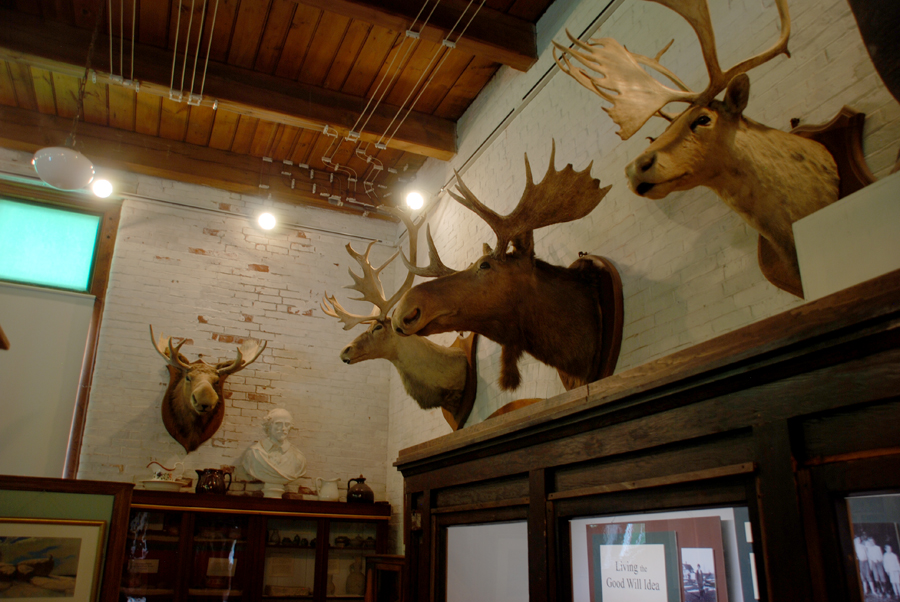
   On June 27th, Ant Girls visited the L. C. Bates Museum in Hinckley Maine. Deborah Staber, one of the sponsors of our MAC grant, met with us and provided a tour of the museum. This natural history museum, filled with collections of birds, animals, Native American artifacts, minerals, fossils and other curiosities  has an active Outreach program, using all on display as an educational resource for the community. Our Ant Farm show will travel to this location, at a time yet to be determined, and we took this opportunity to plan how we can exhibit work in this space. Our exhibition will be used to stimulate interest in ants which will be incorporated into the outreach educational programs for children. With so many activities going on in the museum when we were there, with summer programs in full swing, the L.C. Bates Museum had the feel of a busy ant colony at work.
photos here


Thanks to Deb Staber for hosting our visit and supporting our exhibit in 2014!!!


Building and Assembling
    On July 12, Ant Girls met for another studio work session.  The AGs have been busy working in their own studios in preparation of this work session. 
Nuptual Flight and Swarm
 Having created winged ants and printed wings for our wing pile, we started the initial stage of assembling the nuptial swarm part of the exhibition.  
    “After the mating flight, all males die. The sole function of male ants is to provide sperm, which are stored and kept alive for many years in the spermatheca of the queens. Thus, the life span of male ants (which develop from unfertilized eggs and are therefore haploid) is very short. However, because of the long preservation time of sperm in the queen’s internal “sperm bank,” males can becomes fathers many years after they have died. “ (Höldobler, B. and Wilson, E.O.)
Fungus Garden,
    In anticipation of this work session, Ant Girls each took 29 sheets of 20”x 20” Velata paper home to then make into paste paper on both sides for assemblage into the Fungus Garden. The weather couldn’t have been better for this project: endless days of rain, punctuated with hot, suffocating humidity. Not typical Maine summer weather, it must have been just for the Ant Girls.
Ants and humans are two species that practice farming.


    “ As the fresh leaves and plant cuttings are brought into the nest, they are cut into smaller and smaller pieces and treated with the ant’s fecal liquid before being inserted into the garden substratum. The ants subsequently pluck tufts of mycelia from other parts of the garden and plant them on newly formed portions of the substratum. The inoculum proliferates swiftly thereafter: the transplanted mycelia grow as much as 13 micrometers per hour. With increasing size, the fungus garden also serves for the partitioning of the large nest cavities excavated from the soil. The larvae and pupae are housed in the fungus garden chambers where nurse ants care for the immature.” (Höldobler,B. and Wilson, E.O.)

  Credits: From Höldober, B., Wilson, E.O.:The Leafcutter Ants, civilization by instinct. New York, 2011, W.W.Norton & Company, Ltd.     

5.27.2013

Ant Girls 5/13 Sex, Leaves and Print shops


5/13 Update:

In preparation for the USM Atrium Gallery Exhibition "Ant Farm" in April 2014 , the latest meetings of the AG minds have broken down our production time month by month. Each month we gather to discuss, research, and print one aspect of the Leafcutter ant's life cycle.
In April we made lots and lots of leaves.
May was focused on the printing and engineering of "The Nuptial Flight" a.k.a. mating mid-air!!.
 We, Ant Girls currently have no studio/home base(our former space is going through renovations,) to create our USM installation....so we've been Shop-hopping!
Thank you to both Peregrine Press and MECA's Printmaking Dept. for the temporary use of space.
We practiced good shop etiquette by leaving both spaces cleaner than when we arrived!
Check out Rebecca testing our leaf installation at her place. WoW!!!


Leaves leaves and more leaves at Peregrine Press.
The nuptial flight of  Leafcutter Ants is made up of  winged sexual male and female ants taking to the skies to consummate their biological role in the cycle of life. The females are stronger in flight, naturally, handling the mid-air sex better than most males and the landing to hopefully become an egg-laying queen while the males, post-coitus, die.
Both sexes shed their wings. The successful queens eat the discarded protein-filled wings.


[Wingless queens of the leafcutter ant genus Acromyrmex that remain sterile and cannot found their own colony alter their behavior completely and, in contrast to fertile queens, help to defend their mother colony.

It was previously assumed that ant queens who lose their wings before their nuptial flight and remain unfertilized simply die. Some of them are also eaten by their sisters, allowing the energy stored in their bodies to be made useful for the colony. However, leafcutter ants feed on a fungus that they grow in their colonies and that provides them with plant nutrients. "We suspect that they have lost the ability to digest meat and recycle their queens," says Nehring. "There is thus an evolutionary advantage to keeping the sterile queens alive and making them useful for the colony in another way." They hardly have to feed at all, because they live from reserves and digest their own wing muscles like the fertilized queens.] Text courtesy of Albert-Ludwigs-Universität Freiburg


Below: Rebecca Goodale shows how to create a volumetric paper form which we will be using to create the nuptial swarm.

p.s. Have you seen the "Green Porno" movies with Isabelle Rossellini?
see also below ...thanks to Rebecca for sharing the bee video in particular!

Ant Girls in action at MECA's Printmaking Department.
                                Oh Isabella!